EL-SPEED ACADEMY
Your gateway to expert math solutions and resources
Apply for online Mathmatic class and one on one class
Portfolio
Comprehensive Support and Guidance
Receive expert guidance during your project development phase, ensuring accuracy and high-quality outcomes.
Custom Educational Resources
Access a wide range of materials including project documentation, dissertations, and theses, customized to your specific needs.
Online Mathematics Tutoring
Engage with professional tutors in a flexible and interactive platform tailored to enhance your math skills and confidence.
Online Tutoring
Interactive and personalized online tutoring sessions aimed at addressing individual educational needs and goals.
Here are the six major pillars of secondary mathematics
Here is a comprehensive list and explanation of secondary school maths topics
Here are the six major pillars of secondary mathematics
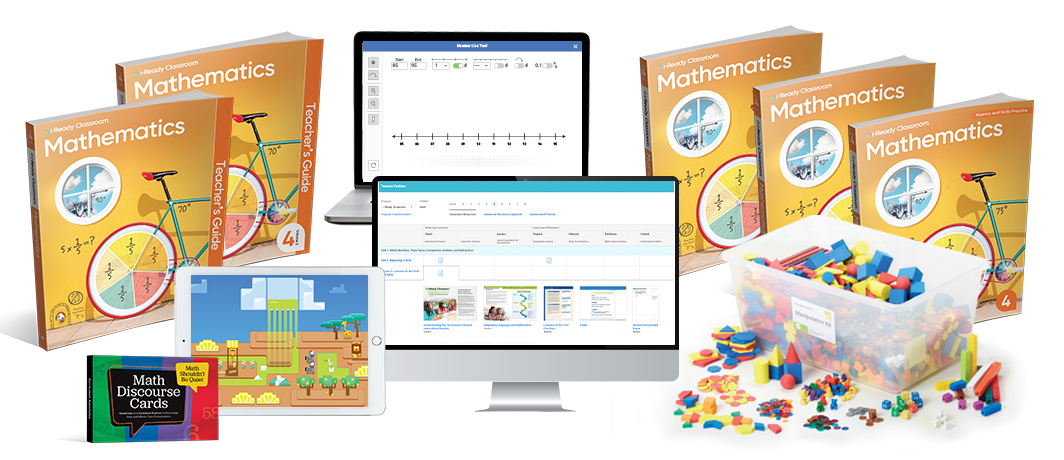 Pillar 1: Number and Operations (The Foundation)
Types of Numbers:
- Content: Defining natural numbers, integers (positive and negative), rational numbers (fractions/decimals), and irrational numbers (like π or √2).
- Why it matters: Knowing which number system you are working in is crucial for knowing which rules apply.
Indices (Exponents) and Roots:
- Content: The laws of indices (multiplying powers, negative powers, fractional powers like $x^{1/2}$) and simplifying surds (roots).
- Why it matters: This is the grammar of advanced algebra and science equations.
Standard Form (Scientific Notation):
- Content: Writing very large or very small numbers efficiently (e.g., $3 \times 10^8$).
- Why it matters: Essential for physics, chemistry, and understanding real-world data like populations or microscopic distances.
Fractions, Decimals, and Percentages:
- Content: Converting between them, calculating percentage change (increase/decrease), reverse percentages, and compound interest.
- Why it matters: The most practical "real-world" Mathematics strand used in finance, shopping, and news reporting.
Pillar 2: Algebra (The Language of Maths)
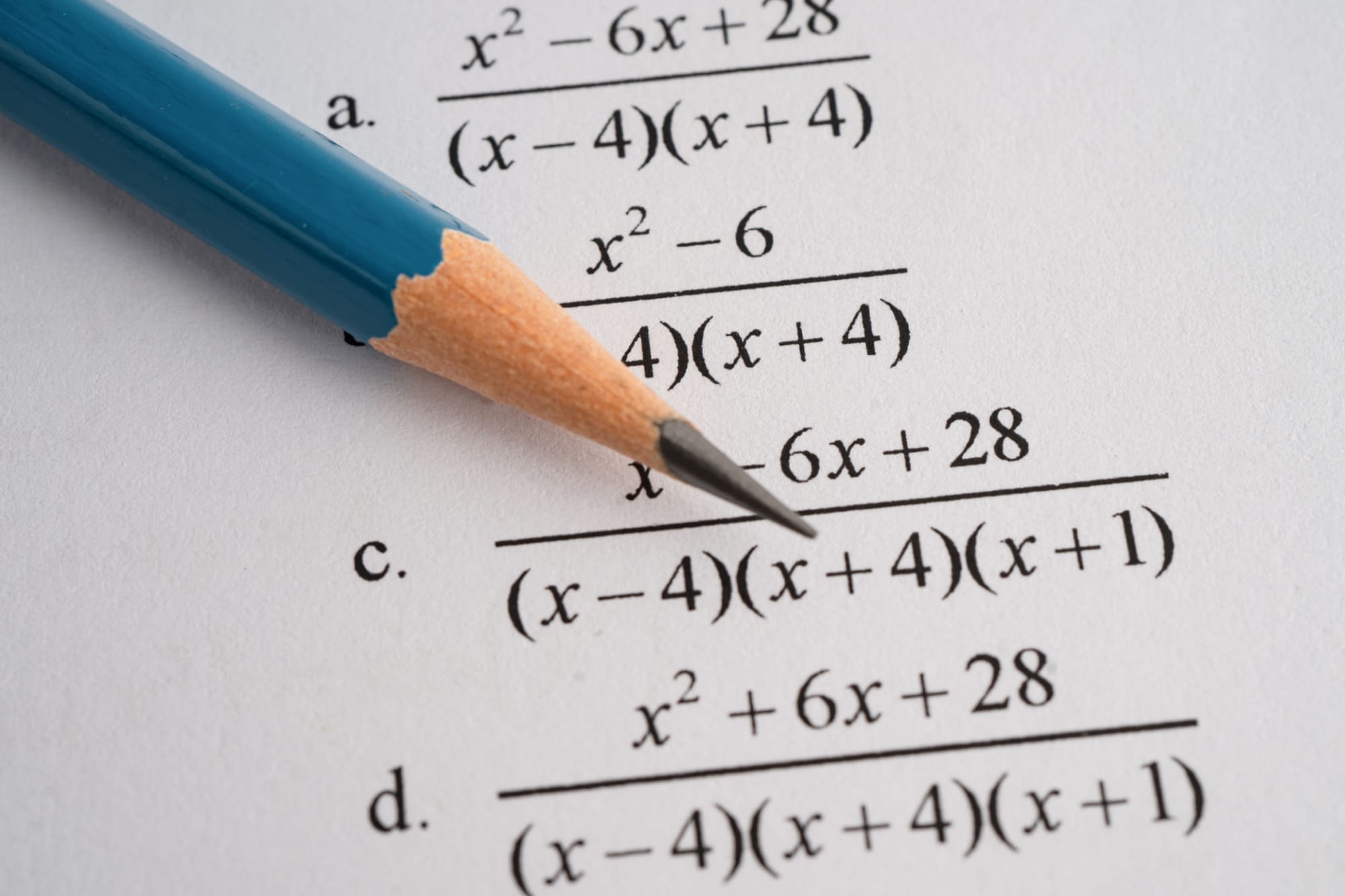 Algebra is generalised arithmetic. It uses symbols to represent unknown quantities and relationships.
Algebraic Expressions:
- Content: Collecting like terms, expanding brackets (FOIL method), and factorisation (taking common factors out).
- Why it matters: The basic "cleanup" toolkit required before solving any equation.
- Linear Equations and Inequalities:
- Content: Solving for $x$ in equations like $3x + 5 = 20$, and handling inequalities ($<, >, \leq, \geq$) and showing them on a number line.
- Why it matters: Finding a single unknown value
- based on known constraints.
- Formulas and Rearranging:
- Content: Substituting values into scientific or geometric formulas and changing the subject of a formula (e.g., making $r$ the subject in $A = \pi r^2$).
- Why it matters: Crucial for science subjects where you need to manipulate equations to find what you are looking for.
- Quadratic Equations:
- Content: Dealing with equations with an $x^2$ term. Solving them via factorizing, completing the square, and using the Quadratic Formula.
- Why it matters: Used to model things that go up and come down (like a thrown ball) or optimize areas.
- Simultaneous Equations (Systems of Equations):
- Content: Solving two equations with two unknowns at the same time using substitution or elimination methods.
- Why it matters: Finding the "intersection point" where two different conditions are met instantly (e.g., comparing two mobile phone plans to see where they cost the same).
- Sequences and Series:
- Content: Finding patterns in numbers. Arithmetic progressions (adding the same amount) and Geometric progressions (multiplying by the same amount). finding the $n$-the term.
- Why it matters: Used in predicting future trends, finance, and computer science patterns.
Pillar 3: Geometry and Measures (Space and Shape)
This strand focuses on visualising the physical world, understanding properties of shapes, and quantifying space.
Angles and Lines:
- Content: Properties of parallel lines (alternate, corresponding angles), angles in triangles and polygons.
- Why it matters: The foundation of construction, architecture, and design.
2D Shapes (Polygons):
- Content: Properties of quadrilaterals (squares, rhombuses, trapeziums). Calculating Area and Perimeter.
- Why it matters: Essential for measuring land, flooring, painting, etc.
Circles:
- Content: Circumference ($C=\pi d$) and Area ($A=\pi r^2$). Later, "Circle Theorems" which deal with angle properties inside circles.
- Why it matters: Circles are everywhere in engineering (gears, wheels) and nature.
3D Shapes and Volume:
- Content: Calculating Surface Area (wrapping paper needed) and Volume (how much water it holds) for prisms, pyramids, cylinders, spheres, and cones.
- Why it matters: Packaging design, shipping, and manufacturing.
Pythagoras' Theorem:
- Content: $a^2 + b^2 = c^2$. Finding missing sides in right-angled triangles.
- Why it matters: The most famous theorem used in construction and calculating distances between points.
Transformations:
- Content: Moving shapes around a grid: Reflection (flipping), Rotation (spinning), Translation (sliding), and Enlargement (resizing).
- Why it matters: The basis of computer graphics and animation.
Pillar 4: Coordinate Geometry and Graphs
Pillar 4: Coordinate Geometry and  Graphs
GraphsStraight Line Graphs (Linear Functions):
- Content: Understanding $y = mx + c$. Calculating gradients (slope), finding intercepts, and finding the equation of a line between two points.
- Why it matters: Modeling constant rates of change (e.g., speed, hourly wages).
Quadratic and Other Graphs:
- Content: Plotting parabolas ($y = ax^2+bx+c$), cubic graphs, and reciprocal graphs ($y = 1/x$). Recognising their shapes.
- Why it matters: Visualising more complex relationships that aren't just straight lines.
Real-life Graphs:
- Content: Distance-time graphs and velocity-time graphs.
- Why it matters: Connecting math directly to physics and motion.
Pillar 5: Trigonometry (Triangles and Waves)
 Pillar 5: Trigonometry (Triangles and Waves)
Right-Angled Trigonometry (SOH CAH TOA):
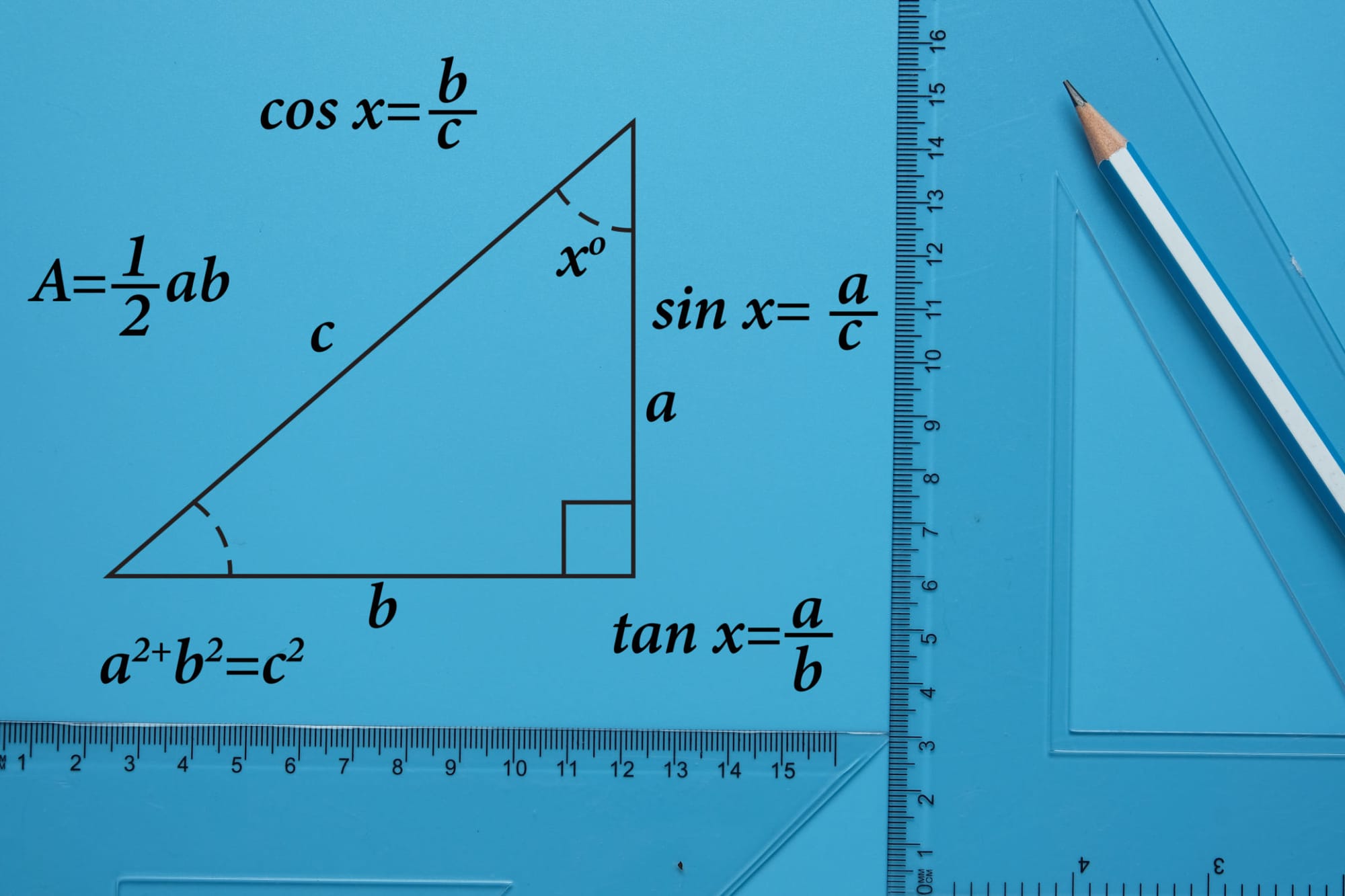
- Content: Using Sine, Cosine, and Tangent ratios to find missing sides or angles in right-angled triangles.
- Why it matters: Used in navigation, surveying land heights, and physics vectors.
Non-Right-Angled Trigonometry:
- Content: The Sine Rule and the Cosine Rule for solving any triangle. The area of a triangle using $1/2 ab \sin(C)$.
- Why it matters: Solving complex surveying or navigation problems where right angles don't exist.
Pillar 6: Probability and Statistics (Data and Chance)
 How to understand data and deal with uncertainty.
Collecting and Representing Data:
- Content: Types of data (discrete vs. continuous). Drawing Bar charts, Pie charts, Histograms, and Cumulative frequency graphs.
- Why it matters: We live in an age of "Big Data." Visualizing it correctly is crucial to avoid being misled.
Statistical Measures (Averages and Spread):
Content: Calculating Mean, Median, and Mode (averages). Calculating Range and Interquartile Range (spread/consistency of data).
- Why it matters: Summarizing large sets of data into understandable numbers (e.g., "average house price")
Probability Basics:
- Content: The probability scale (0 to 1). Calculating probabilities of single events (rolling dice, picking cards). relative frequency (experimental probability).
- Why it matters: Assessing risk and chance.
Combined Events Probability:
- Content: Tree diagrams and Venn diagrams. "AND" rules (multiplying) and "OR" rules (adding). Conditional probability (probability given something else has already happened).
- Why it matters: Calculating more complex risks (e.g., weather forecasting, insurance).
Online Courses
Physical Class
One on One Mathematics class
₦20000/Month
- Are facing any challenges in any subject in your studies?
- El Speed Academy overs you, Register for our one on one tutorial being on line or phisical class.
- Our services covers every location in the world.
- See you in the class!
JAMB , WEAC & NECO TUTORIAL
MOST POPULAR₦50000/3 Months
- We coach you with pass questions and what is expected to come in your exam.
GENERAL SUBJECT, ONLY UNIVERSITY STUDENTS
₦30000/Month
- This covers any challenges in university course or projects sorting etc
Chart Room
Here you can participate in our weekly quiz competition and win a price .



Welcome to our new forum.
Here you can ask questions on any subject and also share your new ideas.
Invite friends, neighbours and colleagues to join our forum.
Here you can ask questions on any subject and also share your new ideas.
Invite friends, neighbours and colleagues to join our forum.
Make Enquiry
Email: training @elpeedacademy.com.ng
Tel: +234 703 094 0252
Tel: +234 703 094 0252
